Is Climate Change Real? Separating Myths from Reality
“Is climate change real?” — it’s a question people often ask in conversations, debates, and even classrooms. Some call it a hoax; others call it the biggest threat to humanity. With so many opinions floating around, it’s easy to get confused.
But here’s the truth: climate change is real, and it’s happening right now. From rising global temperatures to extreme weather events, the evidence is overwhelming. Let’s dive into the science, the myths, and the real-life impacts to understand why climate change is not just a theory, but a reality we all live with.
What Do We Mean by “Climate Change”?
Climate change refers to long-term shifts in the Earth’s climate system — not just day-to-day weather. While natural changes have always existed, today’s rapid warming is mostly driven by human activity.
The main driver? Greenhouse gases like carbon dioxide (CO₂), methane (CH₄), and nitrous oxide (N₂O). These gases trap heat in the Earth’s atmosphere, creating what scientists call the enhanced greenhouse effect. Instead of letting heat escape back into space, the Earth keeps getting warmer — much like a blanket that’s too thick.
The Evidence: How We Know Climate Change Is Real
1. Rising Global Temperatures
According to NASA and the World Meteorological Organization, the Earth has warmed by about 1.1°C since the late 1800s. 2024 was officially the hottest year ever recorded, with global temperatures briefly exceeding the 1.5°C threshold that scientists warn could trigger dangerous tipping points.
2. Melting Ice and Rising Seas
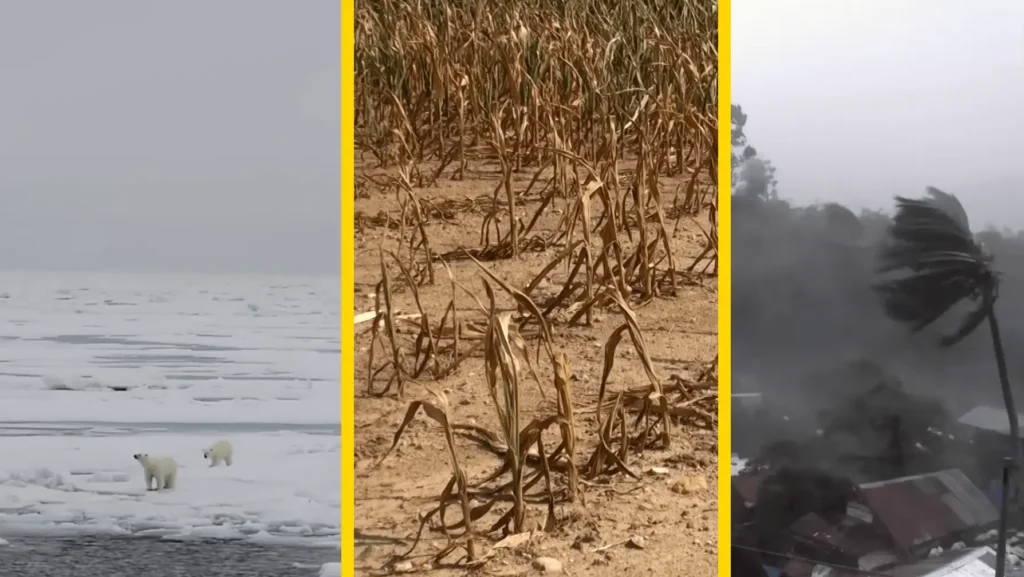
Glaciers and polar ice caps are shrinking at alarming rates. Greenland alone is losing billions of tons of ice each year, contributing to sea level rise. The world’s oceans have risen by over 20 cm (8 inches) since 1900, and the pace is accelerating.
3. Extreme Weather Events
From deadly heatwaves in Europe to catastrophic floods in Pakistan and stronger hurricanes in the Americas, extreme weather is becoming more frequent and more destructive. Scientists link these patterns directly to a warming climate.
4. Ocean Changes
Oceans absorb 90% of excess heat. As a result, they are warming, becoming more acidic, and losing oxygen. This has triggered coral bleaching and threatens marine life and global food chains.
Common Myths About Climate Change
“The Climate Has Always Changed”
True, the Earth’s climate has shifted naturally for millions of years. But the current warming is faster and more widespread than anything in recorded history, and it aligns with industrial-era fossil fuel use.
It’s Just the Weather
Weather changes daily, but climate refers to long-term patterns. A cold winter in one country doesn’t disprove climate change; in fact, shifts in polar air circulation can cause unusual cold snaps as a side effect of warming.
Scientists Disagree
False. About 97–99% of climate scientists agree that climate change is real and mainly caused by humans. The small percentage of dissent often comes from outdated studies or non-climate experts.
Technology Will Save Us Later
While innovations like renewable energy, carbon capture, and electric vehicles are promising, waiting for “future fixes” is risky. The longer we delay action, the harder and more expensive solutions will become.
Why Some People Still Deny Climate Change
Climate denial isn’t always about a lack of facts. It often ties to:
- Politics and ideology – Some groups resist climate action because it challenges current economic systems.
- Misinformation campaigns – Fossil fuel companies have historically funded campaigns to downplay climate risks.
- Psychological distance – People feel climate change is a “future problem” or one that affects “other countries,” not their daily lives.
Real-Life Impacts of Climate Change
Heatwaves and Health
Deadly heatwaves are killing thousands each year. Heat-related illnesses are on the rise, especially in cities with limited green spaces.
Coastal Flooding
Cities like Miami, Jakarta, and Dhaka are already struggling with rising seas. Some small island nations face the risk of being completely submerged.
Agriculture and Food Security
Farmers are facing shifting seasons, unpredictable rainfall, and new pests. This means lower yields, higher food prices, and increased hunger in vulnerable regions.
Security and Migration
Climate change fuels instability. The U.S. Department of Defense has labeled it a “threat multiplier”, warning that rising seas, droughts, and disasters can spark conflicts and create climate refugees.
What the Science Says About the Future
If global warming exceeds 2°C, scientists warn of:
- More intense heatwaves and storms
- Irreversible ice sheet collapse
- Widespread ecosystem collapse
- Billions are facing food and water insecurity
But it’s not all doom. The Paris Agreement aims to keep warming under 1.5–2°C by pushing nations toward net-zero emissions by 2050. If achieved, it could avoid the worst outcomes.
What Can Be Done?
1. Cut Fossil Fuel Use
Shifting to renewable energy (solar, wind, hydro, nuclear) reduces CO₂ emissions dramatically.
2. Protect and Restore Forests
Forests absorb carbon. Halting deforestation and planting trees are vital climate strategies.
3. Invest in Adaptation
Stronger flood defenses, drought-resistant crops, and better disaster planning can help communities cope.
4. Global Cooperation
Climate change doesn’t stop at borders. International agreements, financing for developing countries, and shared research are essential.
Conclusion: The Verdict Is Clear
So, is climate change real?
Yes. The science is clear, the impacts are visible, and the urgency is undeniable. While some still debate it, nature isn’t waiting for consensus. From rising seas to burning forests, climate change is shaping the present — not just the future. Is climate change real? We have to accept it and take preventive measures.
The good news is that solutions exist. By cutting emissions, adopting clean energy, and working together, we can slow the crisis. The real question isn’t whether climate change is real. It’s whether we will act in time.
Is climate change real? FAQs About Climate Change
1. Is climate change really happening right now?
Is climate change real? Yes. Climate change is not a future prediction; it’s already happening. We see it in rising global temperatures, melting glaciers, stronger storms, droughts, and record-breaking heatwaves around the world.
2. What is the main cause of climate change?
The biggest cause is human activity, especially burning fossil fuels like coal, oil, and gas. These release greenhouse gases that trap heat in the atmosphere. Deforestation and industrial farming also add to the problem.
3. How do we know climate change isn’t just natural?
While the Earth’s climate has changed naturally in the past, the current warming is happening much faster than any natural cycle. It also directly matches the rise in greenhouse gases since the Industrial Revolution.
4. What are the biggest risks if climate change continues?
If warming continues unchecked, we could face rising sea levels that flood coastal cities, food shortages due to failed crops, more deadly heatwaves, stronger hurricanes, and millions of climate refugees forced to leave their homes.
5. Can we stop climate change?
We may not be able to stop it completely, but we can slow it down and limit the worst impacts. Switching to renewable energy, protecting forests, cutting pollution, and global cooperation can make a massive difference.